
Quick Summary
Key Features
- Issued in ~30 seconds
- Multiple cards per account
- Apple Pay & Google Pay
- 5-year validity
Main Advantages
- Multi-region availability (6 regions)
- Works with Apple Pay and Google Pay
Notable Limitations
- Paid issuance: $1
- Terms change often — the provider's live numbers are final
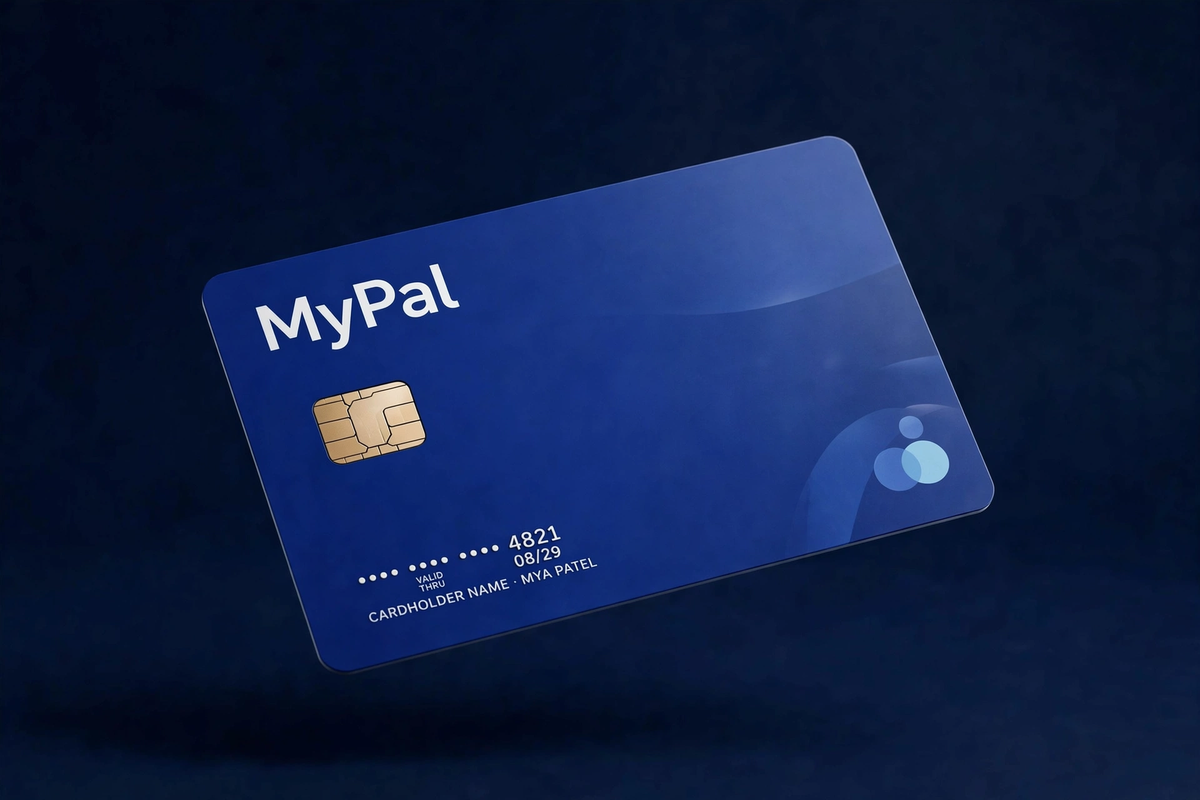
The cards
Every format Mypal issues — pick the one that fits how you spend.
1Can I get this card?
Supported Countries Map — powered by our availability data.
Mypal: Reported in 56 countries across 6 regions (United States, United Kingdom, Europe, Middle East, Pakistan, Asia-Pacific).
Coverage reported by the provider — the exact applicant list is confirmed in-app.
2What does it cost?
Every fee we could verify for the Mypal card.
Fees verified October 13, 2026 from public web sources. Fees change often — always confirm the app's live numbers before signing up. This page is for information only, not financial advice.
| Fee | Mypal |
|---|---|
| Issuance fee | $1 |
| Monthly fee | $0 |
| FX fee | Varies by region — confirm in-app |
3What do I get?
Perks, rewards and capabilities that come with the card.
| Category | Benefit |
|---|---|
| Perks | Issued in ~30 seconds |
| Perks | Multiple cards per account |
| Mobile wallets | Apple Pay & Google Pay |
| Perks | 5-year validity |
| Perks | US stock trading features |
4What do they need from me?
What you will have to provide or meet to get and use the card.
| Requirement | What it means |
|---|---|
| Identity check | ID verification required — verify your identity in the app before ordering |
| Funding | You will need a way to load the card: USDT, crypto |
| Age | You must be 18 or older to apply |
What is Mypal?
Mypal is a crypto-funded Visa card built for one job: giving you a spendable dollar card for as close to nothing as possible. The virtual card costs $1 — with a promo trade-in that can make it free — and the official site advertises a $0 monthly fee. Fund it with USDT, spend anywhere Visa is accepted, add it to Apple Pay or Google Pay, and you have a working international payment method for about the price of a coffee, with no recurring cost to keep it alive.
That value proposition has made Mypal popular for exactly the use cases where cheap, disposable-adjacent card numbers shine: subscriptions, online advertising accounts, and cross-border e-commerce. Cards carry up to 5-year validity, so this is not a burner product — it is a long-lived card at a near-zero entry price. Multi-card support means you can hold several numbers at once and isolate spending by purpose.
The honest caveats: Mypal is a newer brand without the long track record of an established issuer, funding is USDT-only (no bank transfers, no other crypto), and promo pricing can change — the "$1 card" and "free via trade-in" figures should be verified live in the app, because the app's live number wins over any review. But as a low-cost entry into virtual dollar cards with genuinely global coverage, it is easy to see why it has traction.
It is also worth noting what Mypal is not: it is not a bank account, it does not pay interest on balances, and it does not offer the multi-currency sophistication of a Wise or Revolut. It is a spending tool — fund with USDT, spend with Visa — and judging it on those terms, the value is exceptional.
Card types offered
Mypal issues both virtual and physical Visa cards. The virtual card is the star: $1 issuance (sometimes free via promo trade-in), instant delivery in the app, and full online usability wherever Visa is accepted. It is the natural choice for subscriptions, ad platforms, SaaS tools, and e-commerce — any spending where a card number, expiry, and CVV are all you need. Standard controls like freezing the card and viewing full card details in the app apply.
The physical card costs $30–40 USDT — a significant step up that positions it as an optional add-on rather than the default. It makes sense if you need in-person spending, travel, or ATM access in markets where mobile wallets are not universal. For most online-first users, the virtual card plus Apple Pay or Google Pay covers everything at a fraction of the cost.
Multi-card support is a meaningful feature: you can hold several virtual cards and assign them to different purposes — one for ads, one for subscriptions, one for shopping. Combined with up to 5-year validity, Mypal cards are built to be kept, not churned. If a merchant is breached or a trial converts to a paid plan you did not want, you can replace a single card number without disrupting everything else.
The 5-year validity deserves emphasis because it changes the economics. Many ultra-cheap virtual cards are short-lived by design, forcing paid reissues every year or two. A $1 card that lasts five years with no monthly fee has a total five-year cost of about $1 plus top-up network fees — a figure essentially no competitor touches. The main thing to watch is the promo landscape: if the free trade-in promo ends, the entry price reverts to $1, which is still negligible, but verify before you count on free.
Fees explained
Mypal's headline numbers are among the lowest in this roundup. Here is the full picture, with the usual reminder to confirm live numbers in the app.
Card issuance fee
The virtual card costs $1. A promo trade-in offer can make it free — verify the current promotion in the app before ordering, since promo pricing may change or carry conditions. The physical card is $30–40 USDT, priced in stablecoin, which reflects the manufacturing and shipping cost of plastic.
Monthly fee
The official site advertises $0 monthly fee. There is no subscription to keep the card active, which makes Mypal one of the cheapest cards to simply hold long-term. As with any "free" claim, it is worth a glance at the in-app terms for dormancy or inactivity clauses, but no monthly charge is the advertised position.
FX / conversion fee
Funding is USDT-based and the card spends as a dollar card, so USD transactions involve no conversion. For non-USD spending, conversion happens at the card network level — confirm the exact treatment in the app, since Mypal does not publish a separate FX figure prominently. Heavy non-USD spenders should compare against explicit 0%-FX competitors.
Top-up fees
Top-ups are USDT deposits, so the direct cost is the blockchain network fee for your transfer — typically small on Tron, larger on Ethereum. Mypal does not advertise a separate top-up percentage, but confirm the live numbers in the app, as deposit handling can change. As always, larger, less frequent top-ups on a cheap network minimize fees.
ATM fees
ATM access requires the physical card ($30–40 USDT). Withdrawal fees are not published in the sources we reviewed — check the in-app fee schedule if cash access is part of your plan.
How to get a Mypal card
- Download the Mypal app and create your account.
- Complete identity verification. Card issuance requires KYC — have a government ID ready.
- Check the live card price in the app. The virtual card is advertised at $1, with a promo trade-in that can make it free — confirm which applies to you before ordering, since promo pricing may change.
- Order your virtual card and pay the issuance fee shown.
- Top up with USDT from any wallet or exchange. Use a low-fee network like Tron for smaller amounts.
- Add the card to Apple Pay or Google Pay for contactless spending, and use the card details for online payments.
- Order additional virtual cards if you want separate numbers for ads, subscriptions, or shopping — multi-card is supported.
Top-up methods
Mypal is funded with USDT — that is the single funding rail. If you already hold USDT on an exchange or in a wallet, topping up is a simple transfer to your Mypal deposit address. If you do not hold crypto yet, you will need to buy USDT on an exchange first, which adds a step (and the exchange's own fees) for fiat-native users.
The app also supports PayPal and Alipay within its broader payments experience, which broadens its usefulness for users in markets where those wallets are dominant. For the card itself, though, USDT is the funding currency — plan your top-up flow around that. Network choice matters for cost: Tron's USDT transfers are famously cheap, while Ethereum mainnet can cost several dollars, so match the network to the top-up size.
Availability
Mypal reports availability across 190+ countries and regions — one of the widest coverage claims in this roundup. That breadth is a genuine advantage for users in markets where many card products simply do not operate. As always with global claims, the fine print matters: KYC acceptance, card issuance, and specific features can still vary by jurisdiction, and sanctioned regions will be excluded. Check the signup flow for your country. The Visa network itself is near-universal, so once issued, the card spends anywhere Visa is accepted, online or via mobile wallets.
Pros
- $1 virtual card — among the cheapest available
- $0 monthly fee (advertised)
- 190+ countries / regions covered
- Multi-card support
- Apple Pay, Google Pay, PayPal / Alipay support
- Up to 5-year card validity
Cons
- USDT-only funding
- Newer brand with limited track record
- Promo pricing may change — verify in app
- Physical card relatively pricey at $30–40 USDT
Card specs
| Feature | Mypal |
|---|---|
| Virtual card issuance | $1 |
| Monthly / annual fee | $0 |
| Card network | Visa |
| Card type | Virtual |
| KYC | ID verification required |
| Top-up methods | USDT, crypto |
| Supported assets | USDT |
| Regions | United States, United Kingdom, Europe, Middle East, Pakistan, Asia-Pacific |
Rating breakdown
Pros & cons
Pros
- $1 virtual card — among the cheapest available
- $0 monthly fee (advertised)
- 190+ countries / regions covered
- Multi-card support
- Apple Pay, Google Pay, PayPal / Alipay support
- Up to 5-year card validity
Cons
- USDT-only funding
- Newer brand with limited track record
- Promo pricing may change — verify in app
- Physical card relatively pricey at $30–40 USDT
Frequently asked questions
How much does the Mypal virtual card cost?
The Mypal virtual card costs $1, and the official site advertises a $0 monthly fee. A promo trade-in can make it free — verify the live price in the app before ordering.
How much is the Mypal physical card?
The Mypal physical card costs $30–40 USDT.
What can I use to fund my Mypal card?
Mypal is funded with USDT. The app also supports PayPal and Alipay within its broader payments experience.
How long is a Mypal card valid?
Mypal cards offer up to 5-year validity.
Does Mypal work with Apple Pay and Google Pay?
Yes. Mypal supports both Apple Pay and Google Pay.
Where is Mypal available?
Mypal reports availability across 190+ countries and regions.
Our verdict
Mypal is the budget champion of this roundup: a $1 virtual card (sometimes free via promo), $0 advertised monthly fee, up to 5-year validity, and 190+ country coverage is a combination nobody else matches at this price. The trade-offs are a newer brand, USDT-only funding, and promo pricing that needs live verification. If you want the cheapest possible entry into a working virtual dollar card for subscriptions, ads, or e-commerce, Mypal is hard to beat — just confirm the app's live numbers first.
Get the Mypal card
Apply directly with the provider — check current fees and availability for your country in their app.
Visit Mypal's official site →Fees verified October 13, 2026. Always confirm live numbers in-app.
Similar cards
Kast Card
Free Standard tier with 1.5% USD cashback and zero USD spend/top-up fees, serving 170+ countries including the
COCA
Non-custodial card that bundles free SEPA banking, zero-fee swaps across 15+ chains, and up to 8% cashback.
Plasma One
Self-custodial stablecoin neobank paying up to 10% back on AI subscriptions — spend stablecoins, earn XPL and