Quick Summary
Key Features
- Self-custodial (no exchange account needed)
- Monthly 0-fee quota ($400-$800)
- 2-3% cashback rewards
- Apple Pay, Google Pay, PayPal
Main Advantages
- 3.0% cashback on eligible spend
- Multi-region availability (6 regions)
- Works with Apple Pay and Google Pay
Notable Limitations
- Paid issuance: $0.10 USDC
- Terms change often — the provider's live numbers are final
The cards
Every format Bitget Wallet Card issues — pick the one that fits how you spend.
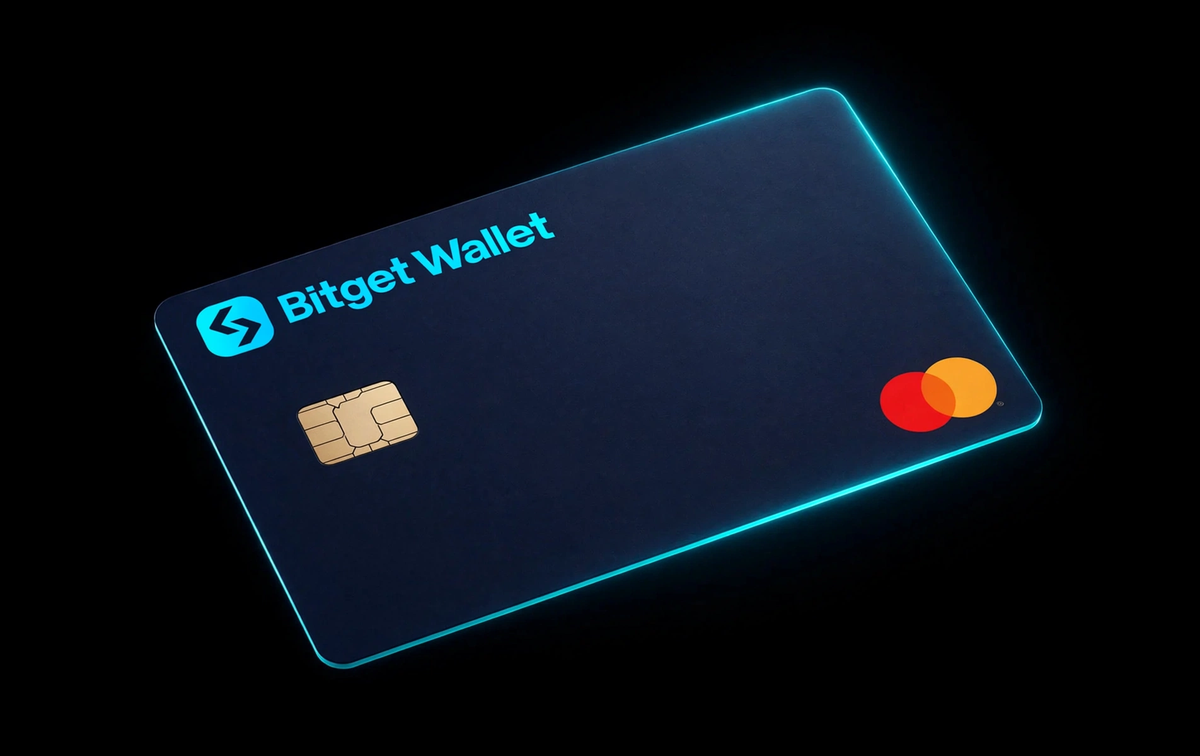
Bitget Wallet Card Virtual

1Can I get this card?
Supported Countries Map — powered by our availability data.
Bitget Wallet Card: Reported in 71 countries across 6 regions (United Kingdom, Europe, Africa, Pakistan, Asia-Pacific, Latin America).
Coverage reported by the provider — the exact applicant list is confirmed in-app.
2What does it cost?
Every fee we could verify for the Bitget Wallet Card.
Fees verified October 13, 2026 from public web sources. Fees change often — always confirm the app's live numbers before signing up. This page is for information only, not financial advice.
| Fee | Bitget Wallet Card |
|---|---|
| Issuance fee | $0.10 USDC |
| Monthly fee | $0 |
| FX fee | Varies by region — confirm in-app |
3What do I get?
Perks, rewards and capabilities that come with the card.
| Category | Benefit |
|---|---|
| Rewards | 3.0% cashback on eligible spend |
| Spending & FX | Self-custodial (no exchange account needed) |
| Perks | Monthly 0-fee quota ($400-$800) |
| Rewards | 2-3% cashback rewards |
| Mobile wallets | Apple Pay, Google Pay, PayPal |
4What do they need from me?
What you will have to provide or meet to get and use the card.
| Requirement | What it means |
|---|---|
| Identity check | ID verification required — verify your identity in the app before ordering |
| Funding | You will need a way to load the card: USDT, USDC, ETH, SOL |
| Age | You must be 18 or older to apply |
What is Bitget Wallet?
Bitget Wallet is the self-custodial wallet from Bitget, one of the largest crypto exchanges, and its card product turns that wallet into a spending account. Issued via the card issuer Immersve, the Bitget Wallet card is a Mastercard — virtual and physical — that lets you spend your crypto at 150M+ merchants worldwide, online or in person. The defining trait is self-custody: your keys, your coins, right up until the moment of purchase.
The fee structure is the other headline. Virtual card activation costs just $0.10 USDC if you complete it within 72 hours of KYC approval — effectively free — rising to $10 afterward. There is no annual fee and, per 2025–2026 announcements, no top-up or monthly fees. The main ongoing cost is a 0.9% transaction fee on spending. For a card with instant virtual issuance, Apple Pay and Google Pay support, and the backing of a major exchange wallet, that is a near-zero fee structure by the standards of this market.
Two caveats deserve prominence. First, KYC requires an international passport only — no national ID cards, no driver's licenses — which will exclude some otherwise eligible users. Second, availability is still expanding: the UK, EU, and Latin America are covered, with more regions on the way, but it is not yet a global product. An older support page also mentions a $1/month inactivity fee after 12 months of dormancy, which conflicts with the newer "no monthly fee" messaging — verify the live terms in the app.
Card types offered
Bitget Wallet offers both a virtual and a physical Mastercard. The virtual card is the instant-gratification option: once KYC is approved, activate within 72 hours and pay just $0.10 USDC. It is designed for online spending — e-commerce, subscriptions, digital services, ad platforms — and works anywhere Mastercard is accepted. Add it to Apple Pay or Google Pay and it covers contactless in-store payments from your phone too.
The physical card costs $49 and is the right choice if you need a plastic card for travel, in-person payments where mobile wallets are not accepted, or ATM withdrawals. At $49 it is priced as a deliberate upgrade rather than an impulse add-on — most users should start virtual and only go physical if their spending patterns demand it.
Both cards draw from your self-custodial wallet balances via Immersve's issuance infrastructure. In practice this means spending settles against your crypto without a separate manual "sell then withdraw then spend" workflow — the conversion happens at transaction time. With 150M+ merchants on the Mastercard network, acceptance is effectively universal wherever cards are taken.
Fees explained
Bitget Wallet's fees are low but have a few wrinkles worth understanding. Here is each component as publicly reported.
Card issuance fee
Virtual card activation is $0.10 USDC if completed within 72 hours of KYC approval — a deliberately tiny number designed to get you activated fast. Miss that window and activation costs $10. The incentive is clear: finish KYC, activate the card immediately, and you have a working virtual Mastercard for ten cents. The physical card is $49, a separate decision for users who need plastic.
Monthly fee
There is no annual fee, and 2025–2026 announcements describe no top-up or monthly fees. However, an older support page lists a $1/month inactivity fee kicking in after 12 months without use — a direct conflict with the newer messaging. This is exactly the kind of discrepancy where the app's live terms win: check the current fee schedule in the app before assuming zero ongoing cost, especially if you plan to hold the card as a backup.
FX / conversion fee
There is no separately advertised FX markup; spending converts at card-network rates. The cost to watch is the 0.9% transaction fee applied to spending (see below), which functions as the effective per-purchase cost regardless of currency. For USD-pegged stablecoin spending, conversion friction is minimal; for volatile crypto balances, the usual price-movement considerations between top-up and spend apply.
Top-up fees
Per 2025–2026 PR, there are no top-up fees and no monthly fees — you move crypto into your self-custodial wallet and spend it. Standard blockchain network fees apply to the deposit transfer itself, so choose an economical network for routine top-ups. Confirm the live numbers in the app, since fee policies evolve.
ATM fees
ATM withdrawals require the $49 physical card. Specific withdrawal fees are not published in the sources reviewed — check the in-app fee schedule if cash access matters to you, since ATM transactions typically combine operator surcharges with issuer fees.
How to get a Bitget Wallet card
- Install Bitget Wallet (the self-custodial wallet app, separate from the Bitget exchange app) and set up your wallet, backing up your recovery phrase offline.
- Complete KYC with an international passport. This is a hard requirement — national IDs and driver's licenses are not accepted. Have your passport ready.
- Activate the virtual card within 72 hours of KYC approval to lock in the $0.10 USDC activation fee. Waiting longer raises it to $10 — set a reminder.
- Fund your wallet with crypto from any exchange or wallet. Confirm the live fee terms in the app first, particularly the inactivity-fee question.
- Add the card to Apple Pay or Google Pay for contactless spending, and use the card details for online payments at 150M+ Mastercard merchants.
- Order the $49 physical card only if you need plastic for travel, ATMs, or in-person payments beyond mobile wallets.
Top-up methods
Funding flows through your self-custodial Bitget Wallet: deposit crypto from any external wallet or exchange into the wallet, and the card spends against those balances via Immersve. There is no fiat on-ramp described for the card itself — no bank transfers, no debit-card top-ups — so the product assumes you already hold crypto or are comfortable acquiring it on an exchange first.
The self-custody model changes the feel of top-ups versus custodial competitors. Your funds are never sitting in an issuer's pooled wallet; they remain in your wallet, under your keys, until each transaction settles. The practical benefit is control and transparency; the practical responsibility is key management — back up your recovery phrase, because there is no password-reset equivalent for a lost seed phrase. Per current announcements there is no issuer-side top-up fee, so your only cost is the blockchain network fee on the deposit.
A useful habit: keep a small buffer in the wallet above your planned spending. Because the card settles against live crypto balances, a sudden price dip in a volatile asset between top-up and purchase could leave a transaction short. Funding with stablecoins removes that risk entirely and keeps the 0.9% transaction fee as your only per-purchase cost.
Availability
The Bitget Wallet card is available in the UK, EU, and Latin America, with expansion to more regions underway. That is solid coverage but not yet global — users in North America, much of Asia, Africa, and the Middle East should check the app for current eligibility rather than assuming access. Passport-only KYC is an additional filter independent of geography: even in a supported region, you need an international passport to pass verification. Both constraints are actively evolving as the product expands, so re-check periodically if you are currently outside the footprint.
Pros
- Near-zero fee structure ($0.10 virtual activation)
- Self-custody — you control your keys
- Instant virtual issuance
- Apple Pay and Google Pay support
- 150M+ Mastercard merchants
- Backed by the Bitget exchange ecosystem
Cons
- Passport-only KYC — no national ID accepted
- 0.9% transaction fee on spending
- Availability still expanding (UK, EU, LatAm for now)
- Conflicting inactivity-fee information — verify in app
Card specs
| Feature | Bitget Wallet Card |
|---|---|
| Virtual card issuance | $0.10 USDC |
| Monthly / annual fee | $0 |
| Card network | Mastercard (virtual), Visa (physical) |
| Card type | Virtual |
| KYC | ID verification required |
| Top-up methods | USDT, USDC, ETH, SOL |
| Supported assets | USDT, USDC, ETH, SOL |
| Regions | United Kingdom, Europe, Africa, Pakistan, Asia-Pacific, Latin America |
Rating breakdown
Pros & cons
Pros
- Near-zero fee structure ($0.10 virtual activation)
- Self-custody — you control your keys
- Instant virtual issuance
- Apple Pay and Google Pay support
- 150M+ Mastercard merchants
- Backed by the Bitget exchange ecosystem
Cons
- Passport-only KYC — no national ID accepted
- 0.9% transaction fee on spending
- Availability still expanding (UK, EU, LatAm for now)
- Conflicting inactivity-fee information — verify in app
Frequently asked questions
How much does the Bitget Wallet card cost to activate?
Virtual card activation costs $0.10 USDC if completed within 72 hours of KYC approval, or $10 after that window. The physical card costs $49.
What is the Bitget Wallet card transaction fee?
Bitget Wallet charges a 0.9% transaction fee on card spending.
Is there a monthly fee for the Bitget Wallet card?
Per 2025–2026 announcements there are no top-up or monthly fees, but an older support page lists a $1/month inactivity fee after 12 months — verify the live terms in the app.
What ID do I need for Bitget Wallet card KYC?
KYC requires an international passport only — national ID cards are not accepted.
Is the Bitget Wallet card self-custodial?
Yes. The card is issued through Bitget's self-custodial wallet via issuer Immersve, so you keep control of your keys and funds until you spend.
Where is the Bitget Wallet card available?
Availability covers the UK, EU, and Latin America, and is expanding to more regions.
Our verdict
The Bitget Wallet card pairs the two things that matter most in this category: genuine self-custody and a near-zero fee structure — $0.10 virtual activation (inside the 72-hour window), no annual fee, no top-up fees, and just 0.9% per transaction. Passport-only KYC and still-expanding availability are the real gates, and the conflicting inactivity-fee information needs a live check in the app. If you hold crypto in a self-custodial wallet and qualify, this is one of the best-value cards available in 2026.
Get the Bitget Wallet Card
Apply directly with the provider — check current fees and availability for your country in their app.
Visit Bitget Wallet Card's official site →Fees verified October 13, 2026. Always confirm live numbers in-app.
Similar cards
Kast Card
Free Standard tier with 1.5% USD cashback and zero USD spend/top-up fees, serving 170+ countries including the
COCA
Non-custodial card that bundles free SEPA banking, zero-fee swaps across 15+ chains, and up to 8% cashback.
Plasma One
Self-custodial stablecoin neobank paying up to 10% back on AI subscriptions — spend stablecoins, earn XPL and